Case File No. 01 · Murals and Public Art
Cohen v. G and M Realty: the 5Pointz whitewash
Cohen v. G and M Realty L.P., 320 F. Supp. 3d 421 (E.D.N.Y. 2018)
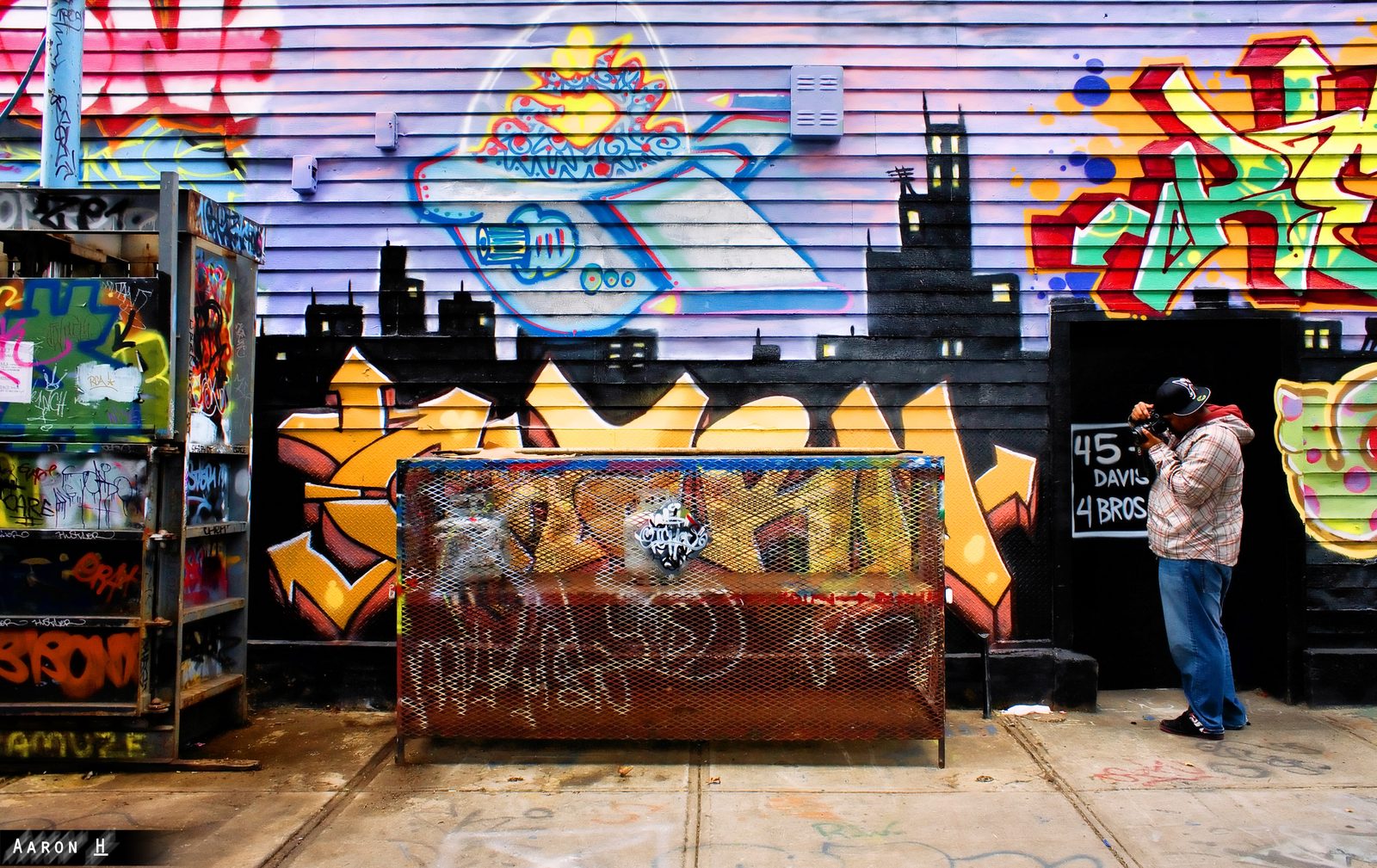
Aaron Harewood
5Pointz graffiti walls, 2008
Photograph by Aaron Harewood, CC BY 2.0. CC BY 2.0 Source: Wikimedia Commons.

The actual 5Pointz walls before the whitewash.
- Court
- U.S. District Court, Eastern District of New York, 2018. Affirmed, Castillo v. G and M Realty, 950 F.3d 155 (2d Cir. 2020). Supreme Court denied certiorari, Oct. 5, 2020.
- Exposure
- Moral rights, destruction of work of recognized stature under VARA
What happened
5Pointz was a Queens warehouse complex whose exterior walls carried aerosol art by dozens of artists, curated by Jonathan Cohen. Developer Gerald Wolkoff, who owned the buildings, allowed the work and at times encouraged it. In 2013, after the artists sued to stop demolition, Wolkoff had the walls whitewashed overnight, destroying 45 works. A jury found the destruction wilful. The trial court awarded $6,750,000 in statutory damages, $150,000 per work, under the Visual Artists Rights Act, 17 U.S.C. 106A. The Second Circuit affirmed, holding that temporary work can have recognized stature, and the Supreme Court declined to review the case.
What the court held
Whitewashing works of recognized stature is a wilful violation of an artist's right of integrity under VARA, even when the artist never owned the wall and the work was always temporary. Recognition is judged by the art world, not by permanence, and a building owner who invites the work cannot destroy it without following the law.
What may have covered it
The loser was the developer, and no standard policy would have saved him. Commercial general liability covers accidental bodily injury and property damage, not a wilful moral-rights destruction, and intentional acts are excluded. A fine art policy covers physical loss to art, not a statutory damages award for destroying someone else's moral rights. The cover that mattered was not insurance at all, it was paper: a signed VARA waiver, or the 90-day notice and removal procedure under 17 U.S.C. 113(d), used before the paint went on.
Coverage depends on the actual policy wording, the facts, and the state. Nothing here is a promise of coverage, and Artist Liability does not sell insurance on this page.
Sources
Second Circuit affirmance, Finnegan summary of Castillo v. G and M Realty